U.S. tariffs, logistics challenges, and shifting consumer expectations are driving new patterns in cross-border auto parts supply chains.
# China's Auto Parts Aftermarket Export Analysis (CAAM Data, Jan–Oct 2026) ## CAAM 2026 Jan–Oct Export Data China exported about **9.27 million vehicles**, up **65.1%** YoY (CAAM). This surge directly drives cross-border aftermarket demand for Chinese-origin auto parts. ## Leading Exporters and Aftermarket Linkages | Manufacturer | 2026 Jan–Oct Vehicle Export Volume | Key Aftermarket Parts Opportunity | |-------------|-------------------------------------|-----------------------------------| | **Geely Auto** | 1.12 million units (+63%) | Volvo/Geely shared-platform engine parts, hybrid modules | | **Great Wall Motor** | 0.78 million units (+42%) | Pickup (Poer) chassis, off-road (Haval) suspension parts | | **Weichai Power** | 0.51 million commercial vehicles (+58%) | Heavy-duty diesel engine components, transmission systems | ## Export Growth Mapping to Aftermarket Demand - **Southeast Asia & Middle East**: Geely/Great Wall dominance → rising demand for brake pads, filters, and body panels. - **Europe & Eastern Europe**: Weichai commercial vehicles → fuel injection systems, turbocharger parts. - **Global Hybrid Market**: Geely's hybrid lineup → battery thermal management, electric motor components. ## Actionable Insight Aftermarket suppliers should align inventory with Geely's hybrid platforms and Weichai's heavy-duty engine ecosystem, as these segments show the fastest export-driven growth.
2026/11/20
Reading volume: 0
News Details
Chinese Auto Parts Export Growth Drives Global Aftermarket Repairs
Chinese vehicle exports are shattering records nearly every month, and that wave is quietly writing the demand forecast for the global auto parts aftermarket. According to data from the China Association of Automobile Manufacturers (CAAM) cited across Chinese industry media in November 2026, China exported roughly 9.27 million vehicles in the first ten months of 2026 — up 65.1% year over year and already above the country's full-2025 total. Every one of those vehicles will one day need a valve, a headlamp, a grille or a filter. For auto parts distributors, Chinese auto parts export growth is not just a trade statistic: it is a map of where aftermarket demand will appear over the next three to five years.
The Export Numbers Behind the Shift
The scale of the 2026 surge is unusual even by recent standards. CAAM-based industry reporting shows monthly exports crossing the one-million-vehicle mark from June 2026 onward, peaking at about 1.07 million units in October (+60.2% year over year). Export share of total Chinese vehicle sales has climbed from under 6% before 2021 to roughly a third in 2026. Three brand-level facts matter most for parts buyers:
| Brand group | 2026 Jan–Oct export/overseas performance (industry reporting citing CAAM) |
|---|---|
| Geely | Vehicle exports up 167.9% year over year |
| Chery | About 1.75 million vehicles exported; roughly 70% of its total sales |
| Great Wall Motor | Overseas sales exceeded half of total sales (51.8%) |
Statistical scopes differ between groups — some report exports, others overseas sales including overseas production — so treat the table as directional. The direction, however, is unambiguous.
Geely Aftermarket Parts: The Fastest-Growing Footprint
Geely's export acceleration is directly relevant to engine parts distributors. Geely's turbocharged 1.5T and 2.0T engines are now driving in the Middle East, Eastern Europe, Southeast Asia and Latin America in growing numbers. A vehicle exported today typically enters its first major maintenance cycle within two to three years — filters first, then timing components, then valvetrain work as mileage accumulates. Geely aftermarket parts demand therefore follows a predictable lag behind the export curve.
For wholesalers, this means building Geely valve and filter coverage now, before local demand spikes price out late movers. Part-number accuracy matters more than breadth: a valve specified by OEM dimensions and application will win the reorder, while a guess will win a return.
Great Wall Auto Parts and Weichai Engine Parts: The Commercial Backbone
Great Wall's pickup and SUV platforms — long the workhorses of its overseas lineup — push the same pattern into harder-duty segments. Great Wall auto parts demand concentrates on engines that tow, haul and idle in heat: exactly the duty cycles that wear exhaust valves fastest. At the same time, Weichai diesel engines power a large share of commercial vehicles, generators and agricultural machinery across Africa, the Middle East and Southeast Asia, and Weichai engine parts have long been a stable, spec-driven aftermarket category. Distributors combining passenger-car valve coverage with commercial-vehicle engine coverage are effectively hedging across two demand curves that both point up.
Chinese Car Brands in the Middle East: Tariff-Free Momentum
Destination markets explain the pace. Industry analyses of 2026 export flows highlight the Middle East as a leading growth region — zero-tariff treatment and purchase subsidies in several Gulf markets have made it a preferred destination for Chinese SUVs and pickups, with Chery, Great Wall, BYD and Geely all expanding presence. Chinese car brands in Middle East markets have moved from novelty to mainstream visibility in under five years, with Saudi Arabia's Vision 2030 agenda directing sustained policy support toward the automotive sector.
Recent export-flow analyses add granularity: in early 2026, Chery held a leading position in Middle East shipments, with BYD, Great Wall, Karry and Dongfeng posting strong growth in the January–April window. For parts distributors in the Gulf, the composition of demand is shifting: alongside the established Japanese and Korean parc, a growing Chinese-brand parc needs valve, filter and body-part coverage. Suppliers who already carry Geely, Great Wall and Weichai applications can serve both waves from one container.
Southeast Asia is the second structural story. Under RCEP tariff reductions, industry reporting notes that Indonesia's BEV import duties have fallen to 8% and Malaysia's BEV import-tax exemption runs to 2027, while intra-regional parts circulation costs continue to decline. Geely led Chinese-brand shipments into Southeast Asia in the January–April 2026 window with about 46,400 units, up 87.6% year over year — much of it flowing through its Proton operations in Malaysia. A denser, cheaper parts-trade network in the region makes it easier for local distributors to restock Chinese-brand coverage quickly, which will accelerate the aftermarket build-out once the exported fleet starts aging.
From New Cars to Repairs: The Aftermarket Wave Follows the Fleet
The mechanism linking exports to parts demand is the vehicle life cycle. A new car needs almost no parts; a three-year-old car needs filters and wear parts; a seven-year-old car enters its first engine-work window. As the exported fleet ages in destination markets, auto parts aftermarket demand rises in step — first for consumables, then for valvetrain and body components. African markets, where much of the parc is built from used imports, generate overhaul-driven demand that favours complete valve sets over single pieces.
The practical takeaway: the best time to stock for a market's Chinese-brand parc is while the vehicles are still new, because the sourcing lead time, sample verification and first-order negotiation all take months that the demand wave will not wait for.
It also pays to read the wave by product line. Filters and brake components feel demand first, typically within the first service cycle. Valvetrain work concentrates in the third-to-fifth year of ownership, when mileage crosses the first major overhaul threshold in hot-climate service. Body parts and lighting follow collision events, which track vehicle density rather than age — meaning exterior-part demand starts almost as soon as the parc reaches meaningful size. Sequencing your orders along that timeline keeps cash flow aligned with how the demand actually arrives.
What Distributors Should Do Now
- Map the parc, not the headlines. Identify which Chinese brands and engine models are actually registered in your territory, and size their three-to-five-year maintenance outlook.
- Build valve coverage on specifications. For Geely 1.5T/2.0T, Great Wall and Weichai applications, source against OEM dimensions and batch inspection evidence rather than catalogue claims.
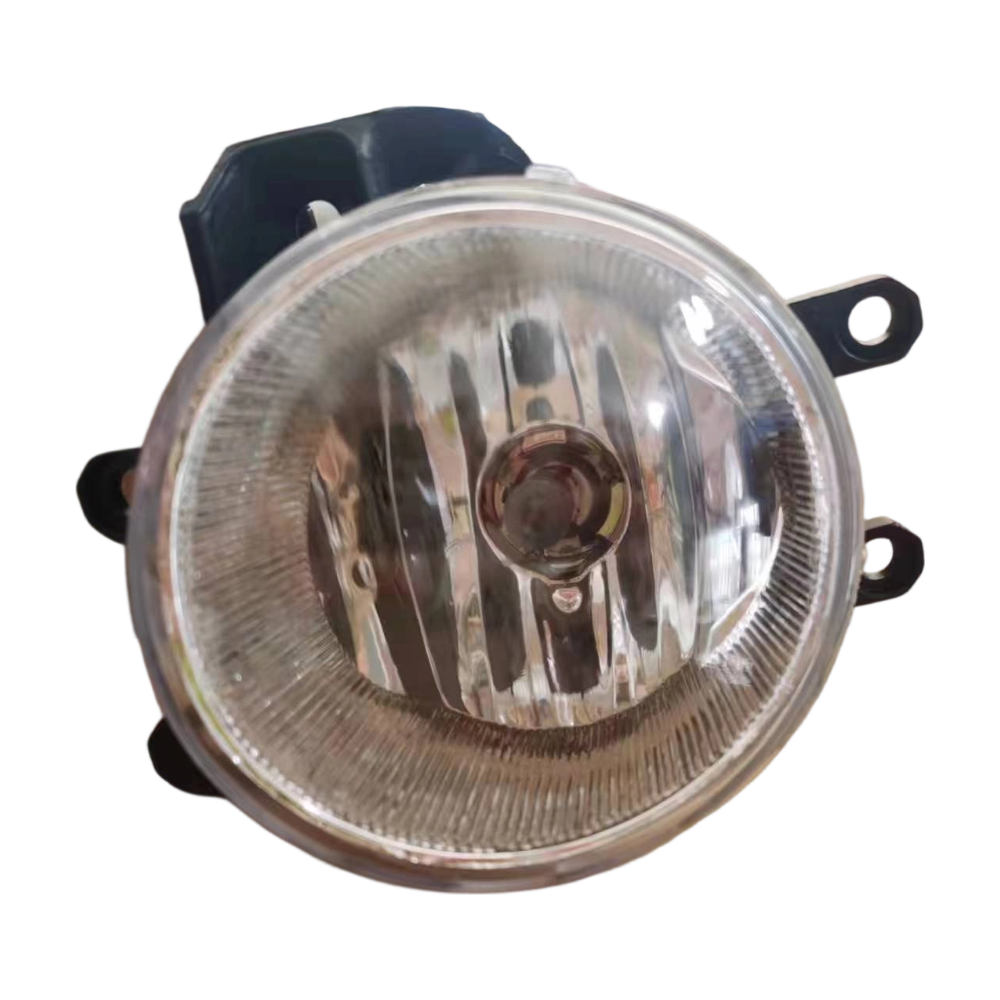
- Combine product lines in one program. Engine valves, oil and air filters, and Toyota exterior parts ship well in mixed containers — consolidating suppliers cuts freight per part.
- Verify fitment before the season. Sample batches installed and checked before peak season prevent the costliest failure mode: a warehouse full of parts that do not fit.
Timing matters as much as selection. A first order for a new application line typically needs quotation, sample verification, production and ocean transit — commonly two to three months end to end. Working backward from the moment the demand wave arrives in your territory, the enquiry should go out well before the vehicles exported today reach their first major service cycle. Distributors who treat sourcing lead time as part of the demand forecast — not an afterthought — are the ones holding stock when the first reorders come in.
Working with a Supplier Inside the Export Corridor
Ruian, in Zhejiang province, sits inside the Wenzhou–Taizhou automotive parts cluster that supplies much of China's export vehicle industry. Gold Auto Part is an import and export company based there, manufacturing engine valves for Geely, Weichai and Great Wall applications and exporting Toyota exterior parts, oil and air filters to wholesale buyers across the Middle East, South America, Southeast Asia and Africa. Production follows ISO 9001 and IATF 16949 quality systems, with three-stage batch inspection before shipment.
China's export boom is building tomorrow's aftermarket fleet today. Distributors who align their sourcing with that fleet — by brand, by engine application and by region — will own the reorder cycle when the demand wave arrives. Contact Gold Auto Part to discuss valve and parts programs built around the Chinese-brand parc in your market.
Share to:


