The Importance of Vehicle Fitment Data for Auto Parts Distributors
News Details
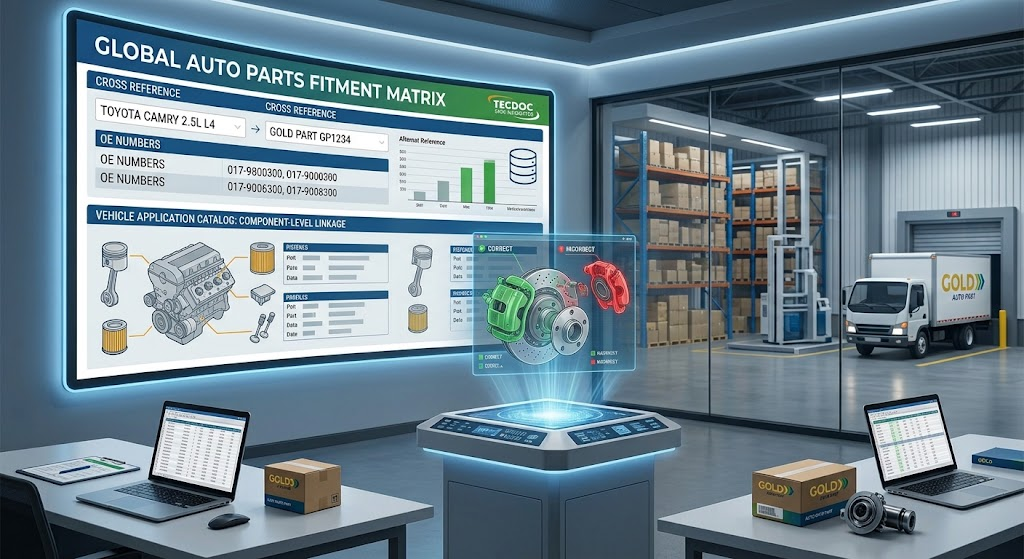
For auto parts distributors, selling the right part is just as important as selling a quality part.
A component may look correct but still fail to fit a specific vehicle. Differences in model year, engine type, trim level, market version, or mounting design can all affect compatibility.
This is why auto parts fitment data is so important in the aftermarket.
Clear fitment information helps distributors identify the correct parts, reduce wrong orders, improve customer service, and manage large product catalogs with greater confidence.
What Is Auto Parts Fitment Data?
Auto parts fitment data describes which vehicles a specific part is designed to fit.
Depending on the product, this information may include:
-
Vehicle make and model
-
Model year
-
Engine type or engine code
-
Vehicle generation
-
Trim level
-
Market or regional version
-
OE reference number
-
Part number
-
Product dimensions
-
Left-hand or right-hand position
For example, a Toyota headlamp may fit one model year but not another. An engine valve may also look similar to another valve while having different dimensions.
Therefore, the vehicle name alone is often not enough.
A reliable fitment record connects the part to the exact vehicle application.
Why Fitment Accuracy Matters to Distributors
For distributors, incorrect fitment can create problems at several stages.
First, the customer may order the wrong product. Then, the distributor needs to handle the return, replacement, shipping, and customer communication.
At the same time, the wrong item may remain in warehouse stock.
This creates extra costs.
More importantly, repeated fitment problems can damage customer trust. Repair shops and parts retailers need suppliers that can help them identify the right product quickly.
So, accurate fitment data is not simply technical information. It is part of good customer service.
OE Number Cross Reference Makes Part Matching Easier
An OE number cross reference is one of the most useful tools for aftermarket buyers.
An OE number provides a reference point between an original vehicle part and a replacement product. By checking the reference number, buyers can narrow down the correct aftermarket part.
However, an OE number should not be used alone.
The same vehicle model can have different parts depending on production year, engine, trim, market, or other specifications.
Therefore, distributors should compare the OE number with the complete vehicle application whenever possible.
A useful product record should connect:
Aftermarket part number → OE reference → vehicle model → year → engine/application
This makes product matching much clearer.
A Vehicle Application Catalog Helps Buyers Work Faster
A vehicle application catalog organizes fitment information in a format that sales teams, distributors, and customers can easily use.
Instead of searching through separate product files, a buyer can start with the vehicle and then identify the available parts.
A useful catalog may allow buyers to search by:
-
Make
-
Model
-
Year
-
Engine
-
OE number
-
Aftermarket part number
-
Product category
For distributors with hundreds or thousands of SKUs, this structure can save considerable time.
It also makes it easier for sales teams to answer customer questions without checking multiple documents.
TecDoc Data and Standardized Product Information
TecDoc data is widely used in the European aftermarket to organize automotive product and vehicle application information.
Structured data can help connect parts with vehicle applications, reference numbers, specifications, and product categories.
For distributors serving different markets, standardized product information is valuable because it creates a common way to identify products.
However, buyers should still verify the data supplied by their manufacturer or exporter.
Data quality depends on how carefully product applications, references, and updates are maintained.
Therefore, TecDoc data or any other catalog system should support—not replace—supplier-side verification.
Fitment Data Helps Reduce Returns
Returns are one of the biggest headaches in aftermarket distribution.
A customer may order a part because the product name appears correct. However, the actual part may not match the vehicle.
For example, two parts may share the same vehicle model but have different:
-
Mounting points
-
Electrical connections
-
Dimensions
-
Engine applications
-
Left/right positions
-
Production years
Clear fitment data helps identify these differences before the order is shipped.
As a result, distributors can reduce avoidable returns and make warehouse operations more efficient.
Fitment Data Is Important for Different Auto Parts
The level of fitment detail depends on the product.
For engine valves, buyers may need the engine model, valve type, dimensions, and OE reference.
For headlamp assemblies, model year, market version, side position, lighting type, and OE number may all matter.For oil and air filters, dimensions, engine application, filter type, and cross-reference numbers can help confirm compatibility.
For exterior body parts, buyers may also need to check trim level, body style, mounting structure, and regional specifications.In other words, there is no single fitment format for every product category.
What Should Distributors Ask Their Supplier?Before placing a wholesale order, distributors should ask for clear product and application information.
At a minimum, request:
1. Part number
Make sure every product has a clear and unique identification number.2. OE reference
Ask for applicable OE numbers and cross-reference information.
3. Vehicle application
Confirm the make, model, year range, and engine application.
4. Product specifications
Check dimensions and other technical details when required.
5. Market information
Confirm whether the product is intended for a specific regional vehicle version.
6. Updated catalog data
Make sure new applications and product changes are reflected in the latest catalog.
These checks are especially important when buying products in bulk.
How Better Fitment Data Supports Long-Term DistributionGood fitment data does more than prevent one wrong order.
Over time, it helps distributors build a more organized product range.
Sales teams can find products faster. Customers can identify suitable parts more easily. Warehouse staff can manage SKUs with fewer mistakes. Purchasing teams can also identify which applications need additional stock.
Furthermore, clean data makes private-label and multi-market distribution easier.
When the product number, packaging label, catalog, and vehicle application all use consistent information, the entire order process becomes easier to manage.
Choose an Auto Parts Supplier That Understands Fitment
Quality parts need accurate application data to reach the right vehicle.
For distributors, a reliable sourcing partner should be able to provide clear part numbers, OE references, vehicle applications, product specifications, and practical catalog support.
Gold Auto Part supplies replacement auto parts for international distributors and wholesalers, including engine valves, Toyota exterior parts, oil filters, air filters, and other automotive components.
If you are building a new product range or expanding an existing aftermarket program, accurate fitment should be part of your supplier evaluation from the beginning.
Contact Gold Auto Part
to request product catalogs, OE number cross references, vehicle application information, or a quotation for your next wholesale order.


