Sourcing Oil and Air Filters for Fleet and Wholesale Programs
News Details
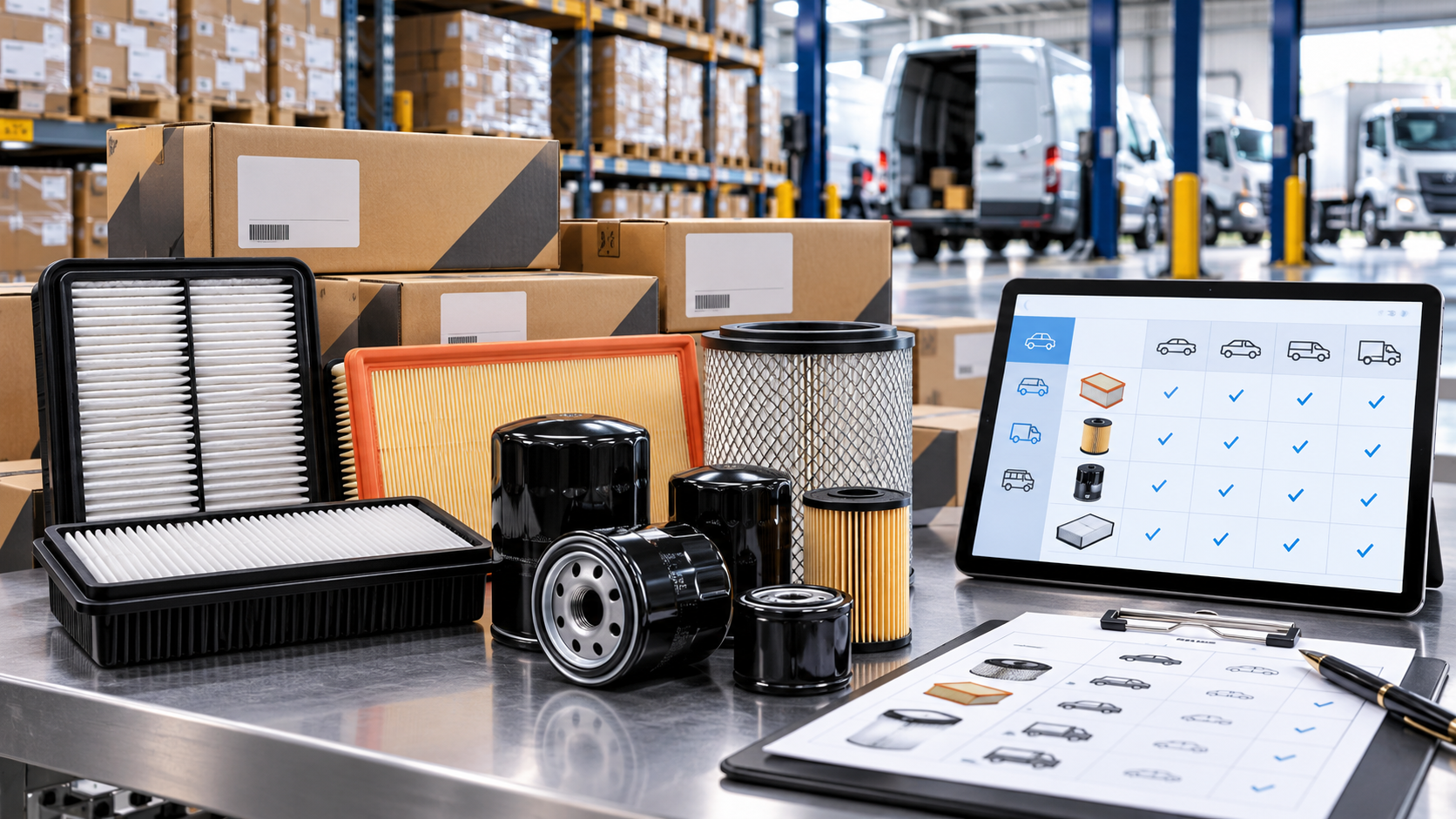
Oil and air filters are fast-moving aftermarket parts. Used often, replaced often, and bought in bulk by repair shops, fleets, wholesalers, and distributors, they require careful planning to source properly.
For a fleet filter program, buyers need more than just a low unit price. They need consistent quality, accurate fitment, clean packaging, and reliable on-time delivery. A small error in size, thread, gasket, or application can lead to returns, downtime, and unexpected costs.
Gold Auto Part supplies replacement auto partsfor global B2B buyers, including oil filters, air filters, Toyota exterior parts, and engine valves. As a trusted replacement filter exporter, we support wholesalers and fleet buyers with practical product selection, clear communication, and export-ready service.
Why Filters Matter in Fleet and Wholesale Sales
Filters safeguard the engine and ensure smooth vehicle operation. Oil filters remove dirt and metal particles from engine oil, while air filters prevent dust and debris from entering the engine.
For fleets, this matters every day. Delivery vans, taxis, pickups, buses, and service vehicles often run for long hours. If filters underperform, maintenance costs can rise. In some cases, poor filtration can also shorten engine lifespan.
For wholesalers, filters are equally important because they sell quickly and generate repeat orders. A strong filter line helps distributors serve repair shops, retail stores, and fleet maintenance teams with steady demand.
Start with Vehicle Application and Fitment
Fitment should always come first. A filter may look simple, but small differences can change the outcome. For oil filters, buyers need to verify thread size, gasket size, height, diameter, bypass valve, and anti-drainback valve when required. For air filters, buyers need to check shape, dimensions, sealing edge, material, and vehicle application.
Before placing an order, it is advisable to confirm:
Vehicle make and model
Year range
Engine type
OE number or cross-reference
Filter specifications
Installation position
Market variant
This is especially useful for fleet buyers, as one company may operate multiple vehicle models. A clear fitment list helps the maintenance team select the right filter faster.
Oil Filter Supplier: Key Considerations
A reliable oil filter supplier should offer consistent quality, accurate specifications, and clear product data. Oil filters operate under heat, pressure, and vibration. Therefore, the filter body, sealing ring, filter media, valve components, and internal structure must be dependable.
When comparing oil filters, evaluate these factors:
Durable outer shell
Clean, precise threads and base plate
High-quality sealing gasket
Consistent filter media
Correct bypass valve setting
Anti-drainback valve, if required
Clean packaging and labeling
Additionally, the supplier should ensure batch-to-batch consistency. Fleet and wholesale buyers often reorder the same part numbers multiple times. Each batch should closely match the previous one.
Air Filter Wholesale: Key Buying Criteria
Air filter wholesale programs require broad product coverage and stable packaging. Since air filters come in various shapes and sizes, buyers should build a range based on local market demand.
A quality air filter should seal tightly within the air box. A weak seal allows dust to bypass the filter, reducing engine protection. The filter media should be uniform, clean, and securely bonded to the frame.
When sourcing air filters, compare:
Filter media quality
Pleat count and spacing
Frame strength
Rubber or PU sealing edge
Accurate size and shape
Clean finish
Carton durability
Moreover, wholesalers should prioritize fast-moving applications. This helps reduce slow-moving inventory and improve cash flow.
Building a Fleet Filter Program
A well-managed fleet filter program is simple and efficient. The goal is to keep vehicles serviced on time while minimizing sourcing issues.
To develop an effective program, start with the fleet list. Match each vehicle to the correct oil and air filters. Then, set order quantities based on service intervals, vehicle count, and usage patterns.
A practical fleet filter program may include:
A clear part number list
OE cross-references
Vehicle application data
Monthly or quarterly order plan
Safety stock for fast-moving filters
Warehouse-friendly packaging labels
Reliable reorder support
As a result, fleet maintenance teams can reduce downtime and avoid last-minute sourcing.
Packaging and Labeling for Wholesale Orders
Proper packaging protects filters during storage and transit. It also improves warehouse efficiency. Oil filters need sturdy boxes that safeguard the shell, threads, and gasket. Air filters require cartons that prevent crushing and maintain the integrity of the sealing edge.
For wholesale orders, labels should be clear and legible. They may include the part number, product name, quantity, carton number, and customer brand if private-label packaging is required.
Gold Auto Part offers export-ready packaging solutions for B2B buyers. Clear packaging details help customers plan container space, warehouse storage, and local distribution.
Why Cross-Reference Data Matters
Filter buyers frequently use OE numbers and cross-references to match parts. This is standard in wholesale and fleet sourcing, as buyers often compare multiple brands or systems before ordering.
Accurate cross-reference data minimizes incorrect orders. It also simplifies sales, as customers can match the filter to a number they already know.
However, cross-references should be verified carefully. A number match alone is not sufficient. Buyers should also confirm size, gasket, thread, height, and vehicle application before bulk purchasing.
Choosing a Replacement Filter Exporter
A reliable replacement filter exporter understands both product quality and export requirements. For global buyers, supply involves more than manufacturing filters. It also includes communication, packaging, shipping documentation, and ongoing order support.
Gold Auto Part is headquartered in Ruian, China, a well-established automotive manufacturing hub. The company operates under ISO 9001 and IATF 16949 standards, supplying replacement components for passenger cars and light commercial vehicles. Our core product range includes oil filters, air filters, Toyota exterior parts, and engine valves.
When selecting a supplier, ask:
Do they offer both oil and air filter product lines?
Can they provide fitment and cross-reference data?
Do they support wholesale packaging or private-label boxes?
Can they maintain consistent quality across repeat orders?
Do they assist with export documentation and shipping logistics?
Do they understand fleet and distributor needs?
These questions help buyers reduce risk and build a sustainable supply chain.
Final Thoughts
Oil and air filters are small components, but they play a critical role in fleet and wholesale operations. Successful sourcing depends on accurate fitment, consistent quality, clear data, practical packaging, and reliable supply.
Gold Auto Partsupports global buyers as an oil filter supplier, air filter wholesale partner, and replacement filter exporter. Whether you are establishing a fleet filter program or expanding your wholesale product line, Gold Auto Part provides dependable filters tailored to your market.


